Pages

Showing posts with label experiment. Show all posts

Friday, October 25, 2019

Renewable Energy- Science

Aim: To make a solar powered oven.

Materials: 


  1.   Ruler
  2.   Scissor
  3.   Marshmallow
  4.   Newpaper
  5.   Tin Foil
  6.   Glab Wrap
  7.   Pizza Box
  8.   Black Paper
  9.   Straw
  10.   Selltape
  11.   Biscuit
  12.  Vivd Maker
Steps:
  1. Cut out thr flap on the lid of the pizza box so that it is 5cm around the edge.
  2. Selltape some tinfoil on the inside of the flap
  3. Selltape some glad-wrap so that the hole you have cut on the pizza box lib is covered over with glad wrap.
  4. Put a piece of black plastic on the bottom of inside of the pizza box on the bottom.
  5. Make a paper square that fits inside the pizza box and lays around the edge.
  6. Put a marshmallow on top of the chocolate biscuit, place it on a plastic plate and put it in the solar oven.
  7. Put it in the sun to cook.
Findings:


Time
Temperature
0
Haven't done it
15
Haven't done it
30
Haven't done it
45
Haven't done it

Conclusion


Aim: To make a presentation that investigates different renewable energy's.

Section 1: Title Page

Make a title page that incorporates all renewable energy 's Hydro, Solar, Wind and Wave.

I have done my title page on paper.

Section 2: Definitions

Define and provide a picture of each energy type.

  1. Hydro Energy
  2. Solar Energy
  3. Wind Energy 
  4. Wave Energy
Image result for hydro energy-1     Image result for Solar energy-2     Image result for wind energy-3   Image result for wave energy-4

Section 3; Investigate each of the 4 Energy types.
( Hydro ,Solar ,Wind ,Wave ) 


  1. Type:
Hydro Energy- Hydroelectric energy is energy derived from the movement of water. Water has mass. It falls and flows downward due to gravity. 

Solar Energy- Solar energy is the term used to describe the light and heat produced by the sun. Solar power is the conversion of sunlight into electricity.

Wind Energy- Wind energy refers to capturing the energy from moving air, wind and converting it into electricity. 

Wave Energy- Wave energy is the transport and capture of energy by ocean surface waves and the energy captured is then used for all different kinds of useful work, including electricity generation, water desalination, and pumping of water.
  1. Is it used in NZ ? 
Hydro/Wind - New Zealand has excellent renewable electricity resources. We've got hydro, wind and geothermal up the wazoo. In a typical year, more than 70% of our electricity comes from renewable sources, and the government wants this to increase to 90% by 2025 (for non-dry years).

Wave- yes. New Zealand is very fortunate in its wave energy resource.

Solar- I don't know.

  1. Other Countries that use it?
Hydro- Yes, There are other countries that have hydro power such as China, Canada, Brazil, the United States and Russia, they also have big land masses.

Solar- Yes,  China, United states, Japan, Germany, India, Italy, United Kingdom and Australia have Solar Energy. 

Wind- Yes,  France, Canada United Kingdom, Spain, India, Germany, United States and China have Wind energy.

Wave-  Yes,The Western coasts of Scotland, Northern Canada, Southern Africa, Australia, Northwest Coast of United States and particularly Alaska have Wind energy.   
  1. How is it used to generate electricity?
  2. Draw and label a diagram of the main parts of the electricity generator? This can be done on paper and uploaded or on a drawing program on your device. I do not want any Internet images or pictures. They must be hand drawn using a ruler and labelled.
1.  
2.
3.

4.


Section 4: Renewable Energy in the future.

List 10 ways that renewable energy will be used in the future to replace our current activities.


Friday, September 6, 2019

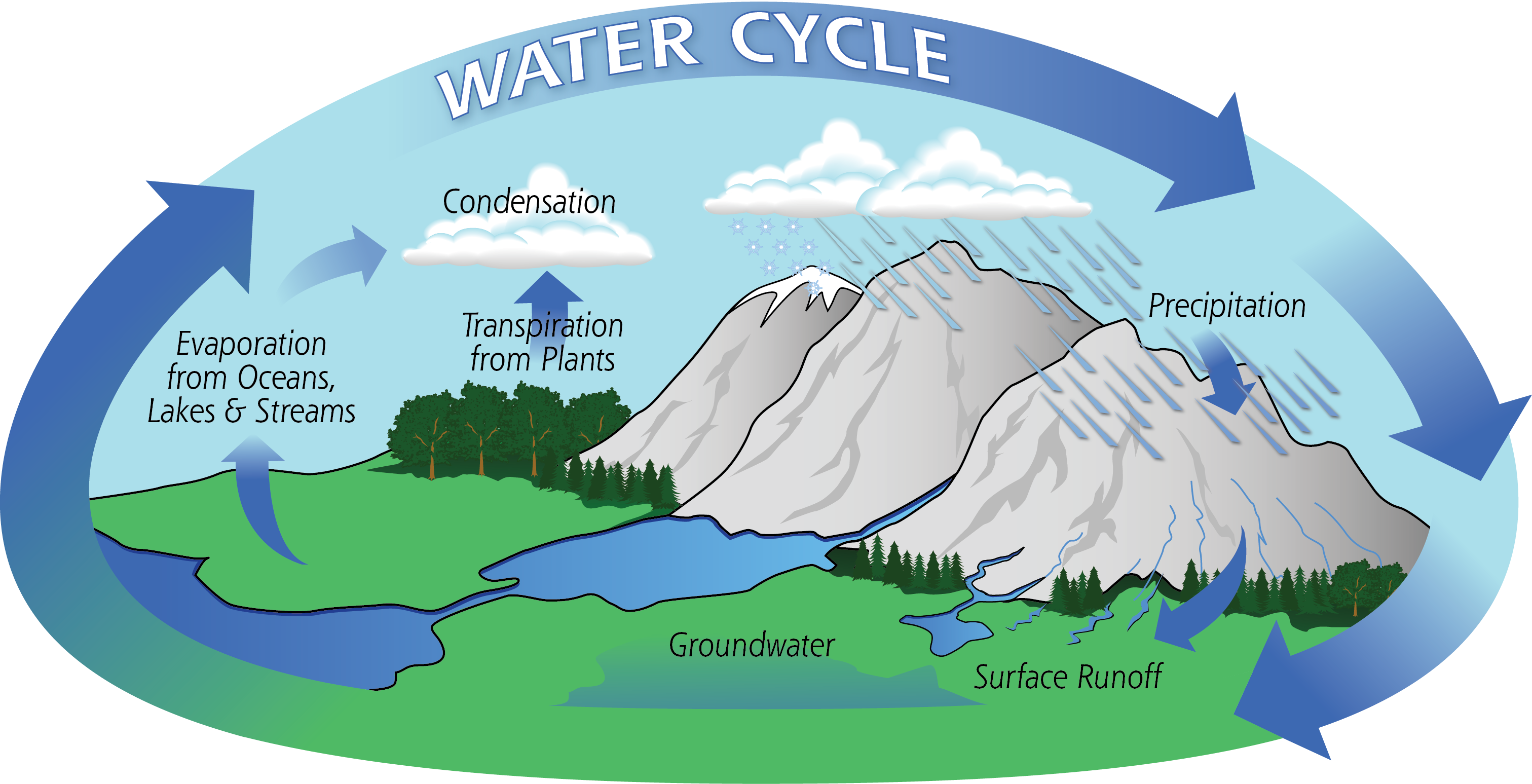
Water Cycle.

Last week for Sciences we had done a different experiment. What we did was Water Cycle. We had to get a zip lock bag and had to draw the wate cycle onto the bag and we carefully add 1/2 warm water and 2x drop of blue food colouring into the bag. I wasn't there last week because I was sick but I do know a little bit of the experimet. We did two experiment, but I don't know everything about it. Here is my steps and Materials and my outcome of water cycle.


  • Evaporation. When water is heated by radiant energy it turns into water vapor.
  • Transpiration. Evaporation from plants.
  • Condensation. When water vapor cools, molecules join together and form clouds.
  • Precipitation. When clouds get heavy the waters falls as rain, sleet, hail, or snow.
  • Acidification: the action or process of making or becoming acidic.

THE WATER CYCLE SONG

Image result for the water cycle


THE WATER CYCLE EXPERIMENT


https://docs.google.com/document/d/1GryZSpdizqzQQgnvnrPuyzJQ_gnR5yfyVwoN2K5Xm-w/edit#

Monday, May 6, 2019

Filtration-Science

Aim: To make a filtration plant using household materials.

Image result for filtration science experiment
Water Filtration Plant

What is filtration?


Filtration is separating solids from liquids by adding a medium through which only the liquid can pass. 

Examples are:

  1.  Cleaning 
  2.  Kettle
  3.  Pool
  4. Heat pump

Materials

1. Cups
2. Filter papaer 
3. Funnel 
4. Sand 
5. Water Bottle 
6. Rocks
7.  Container
8.

Process - ( use verbs or doing words in each step )


Step 1

Cut the bottle with the scissorns to make a funnel.

Step 2

Put the top half upside down and place it into the bottom half of the bottle.

STEP 3

Add layers of sand and pebbels into the funnel and then put it in the top half of the bottle.

STEP 4
Get 1 cup of dirty water 

STEP 5

Pour dirty water into the funnel with the sand and rocks in it.

Findings
When we added the dirty water into the funnel, the dirty water went very fast and our was a fail. The water at the botton was very dirty and muddy with all the little peices and the rocks.


Conclusion: This experiement I did today was probably my least favourite one because we had to touch lots of disgusting pieces and dirty water. The water the flowed through the fitler was clear with a green tinge. The bark,soil and leaves sat on top of the rocks. I learnt something that is interesting was how to make a fitler, I reckon next time for me I should put the rocks carefully into the funnel because all of the water went staright down. I hope you enjoy and I will be posting a lot of experiment that you would be exited to do and I hope you learnt something off me.


Monday, April 8, 2019

Rainbow paper- Sciences

Today D.S and my class S.H, we did our first experiment but it was only a little experiment. I really enjoy doing this experiment and I really like how the water based pens went up and it was mixing different colours.We was using green and blue but it mixed into a pink and purple, I really like how it did that. 


Rainbow Paper


Aim: To separate colours by using the process of chromatography.


 Materials:

  1. Filter paper

  2. Water based felt pens.

  3. Ruler

  4. Cup

  5. Water

  6. pencil


Process:

Step 1: Rule 1 cm on the paper

Step 2: Draw a slight line on the paper and add two dots using the water felt pen.

Step 3: Get the plastic cup and the paper in there with the dots at the bottom but not touching

Step 4: Add a little bit of water

Step 5: Fold the top of the paper

Step 6: Wait and see what happens


This is what happened.

Conclusion: What have I learnt from this experiment?

Today with this experiment I learnt different materials. I just realise that water based felt pens are actually real
thing. Also at the start we only used 2 colours, we used blue and green but in the end it ended up changing
into other colours like pink and purple. I really enjoyed watching the colours smudge together making
different colours, and also was moving in different directions and speeds.